
The Most Common Causes of Washing Machine Drain Problems in Langley
Proper drainage is essential for washing machines to function effectively. When a washing machine fails to drain correctly, it can lead to incomplete washing cycles, water retention, and potential damage to the appliance. Ensuring that your washing machine drains properly helps maintain its efficiency and extends its lifespan, especially when following a simple diy tune up guide for regular care.
Residents of Langley often encounter several common drainage issues with their washing machines. These problems can range from clogged hoses and filters to pump malfunctions and drainage blockages. Understanding these typical issues is the first step toward resolving drainage failures and keeping your washing machine running smoothly.
Understanding Washing Machine Drainage Systems
A washing machine’s ability to drain properly relies on several key components working in harmony. These include the drain pump, drain hose, lid switch, and the filter and drain basket.
- Drain Pump: This component is responsible for pumping the water out of the washing machine. It activates during the draining cycle to push water through the drain hose and into the home’s plumbing.
- Drain Hose: The drain hose carries the water from the washing machine to the household drainage system. It needs to be clear of blockages and properly positioned to allow water to flow freely.
- Lid Switch: The lid switch is a safety feature that detects whether the washing machine lid is closed. If the lid is open, the machine will not proceed with draining to prevent water from spilling out.
- Filter and Drain Basket: These components catch lint, coins, and other debris before they can enter the drain pump or hose. Regular cleaning of the filter and drain basket is essential to prevent clogs.
Together, these parts ensure that water is effectively removed from the washing machine after a wash cycle. The drain pump pushes the water through the drain hose while the lid switch confirms it is safe to do so. Meanwhile, the filter and drain basket prevent debris from obstructing the flow, maintaining smooth drainage throughout the process.
Common Causes of Washing Machine Drainage Failure
1. Clogged or Blocked Drain Components
Drain Hose Blockages
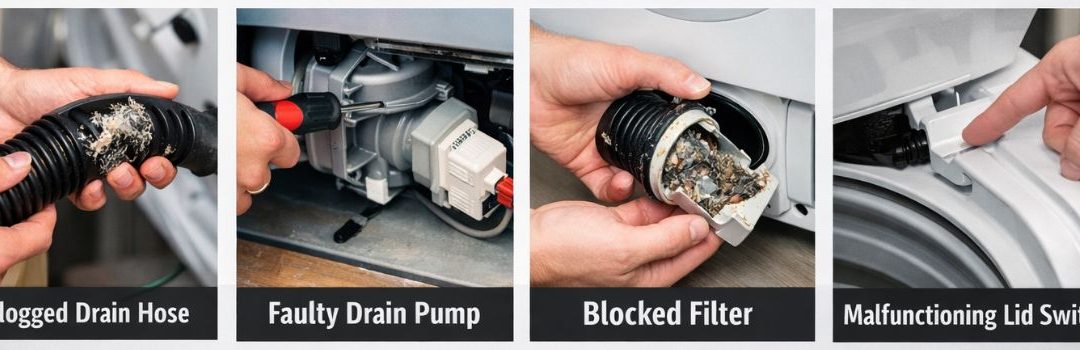
Drain hose blockages are a frequent cause of drainage failure. Lint build-up, debris, kinks in the hose, or improper installation can all restrict water flow, preventing proper drainage. When the hose is clogged or bent, water cannot exit the machine efficiently, leading to standing water inside the washer. According to Langley Appliance Repairs, ensuring the hose is clear and correctly positioned is key to maintaining proper drainage. All Appliance & Refrigeration also highlights that blockages in this area are often overlooked but easily fixed once identified.
Clogged Drain Pump or Pump Filters
Lint, fabric fibers, and foreign objects can accumulate and clog the drain pump or its filters. This buildup restricts the pump’s ability to expel water, causing drainage problems. Signs of a clogged pump include unusual noises during the drain cycle or water remaining inside the drum after the cycle completes. Regular maintenance, such as cleaning the pump filter and checking for trapped debris, can prevent these issues and extend the machine’s lifespan.
2. Faulty or Damaged Pumps and Pump Pulleys
A malfunctioning drain pump is a major reason washing machines fail to drain properly. Symptoms include the pump making grinding noises or failing to run during the drain cycle. Pump pulleys, which help transfer motion within the pump, can wear out or become damaged, leading to drainage failure. Repairing or replacing these components is often necessary.
3. Lid Switch or Door Lock Malfunctions
The lid switch is a safety feature that stops the washing machine from draining if the lid is open. A faulty lid switch can prevent the machine from entering the drain cycle altogether. If the washing machine does not drain, checking the lid switch is a crucial troubleshooting step. Replacement of the switch usually resolves the issue.
4. Electrical and Power Supply Issues
Inadequate or interrupted power supply can prevent the drain pump from operating correctly. Electrical faults such as blown fuses, tripped breakers, or wiring problems may cause the pump to fail to start. Diagnosing these issues often requires professional expertise. If your washing machine is not draining and other mechanical causes have been ruled out, consulting a qualified technician is advisable.
5. Excessive Detergent or Mold Growth
Using too much detergent can lead to residue build-up inside the machine and drainage system, causing blockages. Similarly, mold growth within hoses and drains can obstruct water flow and create unpleasant odors. Regular cleaning and using the correct amount of detergent help maintain clear drainage paths. DTA Service and All Appliance & Refrigeration recommend routine maintenance to prevent these common drainage issues.
Diagnosing Washing Machine Drainage Problems
When your washing machine fails to drain, identifying the root cause quickly can save time and prevent further damage. Follow this step-by-step troubleshooting guide to diagnose common drainage issues effectively.
Checking and Cleaning the Drain Hose
- Unplug the washing machine to ensure safety.
- Locate the drain hose at the back of the machine.
- Detach the hose from the washer and the drain pipe.
- Inspect the hose for kinks, clogs, or damage.
- Use a long flexible brush or running water to clear any blockages.
- Reattach the hose securely before testing the machine.
Inspecting and Testing the Drain Pump
- With the machine unplugged, access the drain pump, typically found behind the lower front panel.
- Check for debris or foreign objects that might be obstructing the pump impeller.
- Manually spin the impeller to ensure it moves freely.
- Use a multimeter to test the pump’s electrical continuity; a lack of continuity indicates a faulty pump.
Verifying Lid Switch Functionality
- The lid switch prevents the washer from spinning or draining if the lid is open.
- Locate the lid switch near the lid frame.
- Test the switch with a multimeter for continuity when the lid is closed.
- Replace the switch if it fails the continuity test or if the washer behaves as if the lid is open.
Examining Electrical Components
- Check the wiring connections to the drain pump and control board for any loose or damaged wires.
- Inspect the control board for visible signs of damage, such as burnt components.
- If you’re not comfortable with electrical diagnostics, consider consulting a professional technician to avoid injury or further damage.
Tools and Safety Precautions
- Tools needed: Screwdrivers, multimeter, flashlight, flexible brush, pliers.
- Safety tips: Always unplug the washing machine before starting any inspection or repair. Wear gloves to protect your hands from sharp edges and debris. Ensure the area around the machine is dry to prevent electrical hazards.
Following these steps helps isolate the cause of drainage problems, allowing for targeted repairs and restoring your washing machine’s functionality efficiently.
Solutions and Repair Options
DIY Fixes for Common Issues
Many drainage problems in washing machines can be resolved with simple DIY fixes. Start by checking and cleaning the drain filter, which often gets clogged with lint, coins, or small debris. Next, inspect the drain hose for kinks or blockages and straighten or clear it as needed. Sometimes, running a hot water cycle with vinegar or a washing machine cleaner helps dissolve soap scum buildup that can obstruct drainage.
Langley Area Specific Considerations
When dealing with washing machine drainage issues in the Langley area, there are a couple of local factors to keep in mind.
Local Water Quality and Its Effect on Washing Machine Maintenance
Langley’s water is known to have varying levels of hardness, which means it contains minerals like calcium and magnesium. Hard water can contribute to the buildup of mineral deposits inside your washing machine’s pipes, hoses, and pumps. Over time, this buildup can restrict water flow and cause drainage problems. Regular maintenance, such as descaling and cleaning filters, is especially important in Langley to prevent these mineral deposits from causing your washing machine to fail to drain properly.
Availability of Repair Services and Parts in Langley
Langley has a good selection of appliance repair services that are familiar with common washing machine issues in the area. Many local technicians understand the impact of Langley’s water quality on appliances and can recommend preventive measures. Additionally, replacement parts for popular washing machine brands are generally available through local suppliers, making repairs more accessible and often quicker compared to more remote areas. If your washing machine is not draining, contacting a local repair service can be an efficient way to diagnose and fix the problem promptly.
Conclusion
Washing machines in the Langley area commonly fail to drain due to issues such as clogged filters, blocked drain hoses, faulty pumps, and problems with the lid switch. Identifying these causes early can help prevent more serious damage and costly repairs. Regular maintenance, including cleaning filters and hoses and promptly addressing any drainage problems, is essential to keep your washing machine running smoothly.
Timely maintenance not only extends the life of your appliance but also saves you from unexpected breakdowns and expensive service calls. Langley residents experiencing washing machine drainage issues can find reliable repair services through local experts who specialize in appliance repairs.
For trusted washing machine repair in Langley, consider reaching out to professionals like Langley Appliance Repairs, who offer expert diagnosis and repair solutions tailored to common problems in this area. Staying proactive with maintenance ensures your washing machine remains efficient and dependable.

LET’S CONNECT
OPEN HOURS
Mon-Fri: 8AM-6PM
Saturday: 10AM-6PM
Sunday: 10AM-6PM
QUICK LINKS:
LET’S CONNECT
(778) 600-1787
service@langleyappliancesrepair.ca
OPEN HOURS
Mon-Fri: 8AM-6PM
Saturday: 10AM-6PM
Sunday: 10AM-6PM
QUICK LINKS:
© 2025 Langley Appliances Repair All Rights Reserved | Privacy Policy | Sitemap